


Early retirement is all about planning, and no doubt anyone on this path spends a ton of time thinking about that exit plan. But here’s a question: What if you get there and don’t end up liking the thing you exited to? Or it gets old over time? What will you do then?
Does your exit plan have an exit plan?
The scariest moments in my life have been those in which I’ve had to eliminate choices and commit to only one. I can see in hindsight that I wasn’t actually afraid of those life transitions — choosing a college, getting married — because I had the incredible privilege of going to an excellent university I adore and marrying a truly wonderful human I love with every ounce of my being. But that door closing, the removal of choices, touches some place deep and primal within me that fears a narrowing of my life’s potential path.
I know not everyone fears making choices that way, and that some people prefer exactly the opposite: knowing their choice and eliminating the other possible options. But either way, retirement could for any of us be very long. It could constitute a huge portion of our lives — 30, 40, 50+ years. That’s a long time, with more variables and unknown unknowns than any of us can account for in our plans.
Which is why it’s so important that your plan allows for this possibility:
What if you change your mind?
It could be for any reason: You decide you miss working. You realize the life you planned out for yourself isn’t what you thought it would be and want to change things. You get bored. (We don’t think it’s likely, but have thought through the “won’t you be bored?” question in depth.) What then?
And of course I know this is one of those “That won’t happen to me” moments. None of us want to think that we are fooling ourselves in planning for something we believe with all our hearts we want. But the truth is that we only know our future, retired selves a little bit. Maybe after detoxing for an extended period, and having work and work stress out of our systems for two, three, five, ten years, we’ll want something very different out of life. Maybe you will, too.
And if that happens, we’ll all be glad if we gave ourselves the latitude — financially, logistically, philosophically — to adjust our path accordingly.


Keeping Your Early Retirement Path Big and Wide
There is an unavoidable decision that comes with retirement, whether it’s early retirement or traditional retirement: leaving work, or at least mostly leaving the standard form of work. That is a huge deal, and a heavy decision we’re now feeling the weight of every day. (This is normal for us, by the way. Live with the anxiety in advance of actually doing the thing, and then move forward with no regrets. Like my pre-wedding freakout for no reason, even though I had zero doubts and have never looked back. That’s just how I roll, and Mr. ONL is wired similarly.)
We’re huge proponents of being intentional in life to ensure that, when you cut off big sources of social interaction, mental stimulation or anything else fundamental (like, ahem, work!), you replace it with something else so your life doesn’t accidentally get smaller. Big life good, smaller life less good.
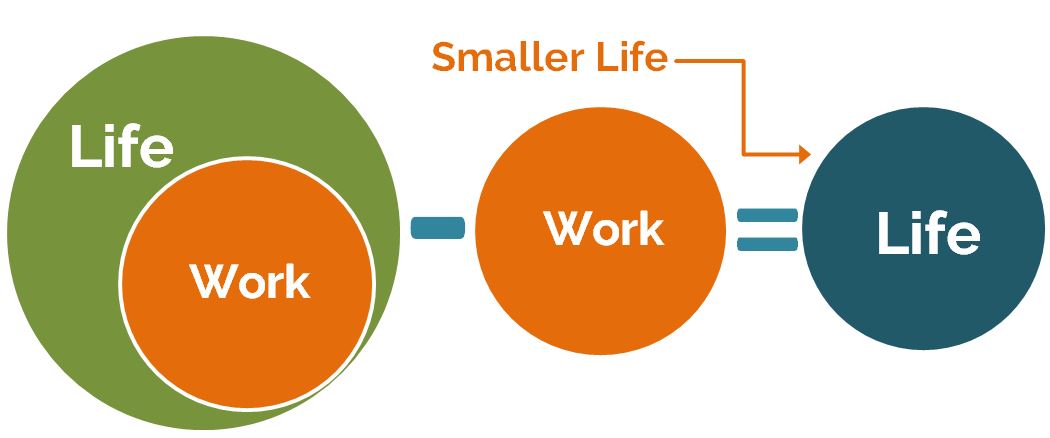

And in this case, talking about having an exit plan from your exit plan, what keeping that big life intact means is keeping your options open, so that you never find yourself forced to continue down a path you’re no longer stoked about, just because you closed off other options along the way.
Let’s get specific.
Exit Plan for Your Living Situation
We get so inspired hearing all the different living situations people cook up for themselves in early retirement: permanent nomad, full-time RV, small home base condo with most time spent traveling, permanent renter, mega landlord, expat — the list goes on. We have at least one friend in every one of those categories, and we check the box of paid off house.
Any living situation can be fantastic, and I’m sure I’m not the only one who has drooled over the blogs and Instagrams of those living the full-time travel life especially. Never more than when we’re battling back the latest encroachment of nature (read: vermin infestation) that seems to be a constant in the mountains. Not being homeowners and hitting the road sounds mighty tempting right about then.
But every living situation has its downsides, too: maybe those nomads will get sick of wandering and will crave feeling more settled. Maybe the RVers will get sick of picking up and moving, and the drill of emptying that icky black tank. Maybe landlords will get sick of dealing with tenants. Fill in the blank for whatever living situation you’ve chosen for yourself — what’s the potential downside, or the thing you could get sick of?
The good news is you’re allowed to change your mind. You’re allowed to change from one living situation to another, or to move from one place to a different one. Unless you’ve boxed yourself in financially, and made it so you can’t afford to do another thing. That’s the exit plan you need to be sure your plan includes. If you get sick of roaming the world forever, do you have the funds to pay rent forever at some higher and ever-increasing future rate? Or the resources to make a down payment, get a mortgage without W-2 income and make payments without fail? If you get sick of living where you retire, do you have the resources to move somewhere else that might be more expensive, or have you based your plan on living in the cheapest places only?
This exit planning is what led us to go with the most expensive option as our starting point: buy a house and pay it off before we pull the plug. We know we could have retired a year or two ago if we were comfortable making mortgage payments in retirement, because we would have funneled more money into savings instead of paying off the house ahead of schedule, but we chose this option because: 1.) it lets us live at the absolute cheapest level once we’re actually retired (no rent, no campsite fees, no hotels or Airbnbs), and 2.) any change of our living situation would be a downgrade, meaning we could afford it.
If we want to go full-time RV from here, we can, with funds to spare. If we want to travel forever, we could rent out the house and benefit from geographic arbitrage. If we decide we hate owning and want to rent, the proceeds from the sale will pay for a lifetime of rent.
We love where we live and have no plans to leave, but we could see moving to the beach once we’re old, our knees are shot, and we don’t feel like dealing with the cold anymore. And while we couldn’t necessarily move painlessly to the most expensive beach towns, we take comfort knowing we could move to any of the rest of ’em and be fine financially.
Exit Plan for Your (Lack of) Work Situation
Many of us going into early retirement say we never intend to work again, or at least we never intend to have to work again. And let’s hope we’re all right. There’s the chance we might need to out of financial necessity, and we discourage everyone from taking the cavalier attitude that you can “always just go back to work.” (Long post on the topic here, but short version: When you’d most likely need to go back to work is when others would need work most desperately, too, and discrimination against people with resume gaps and who are older is real.)
But what if you actually want to go back to work? I get way more emails expressing this exact sentiment than I ever would have expected, enough to think that it’s conceivable we could fit into that category one day, as hard as it is to imagine that now. But maybe we’ll turn 50 after a decade of being perma-kids, and wish we could play adults again. Stranger things have happened.
And in that case, we’ll have to prove to employers that we’re worth considering amidst their stacks of resumes, a task that I assume won’t be made easier by our big employment gap, our lack of current and relevant skills in whatever technology exists at that time, and our ages at that point. What then?
I don’t have answers on this one, mainly because this is a new exit plan from our exit plan we only recently realized we need to consider. But we know it could mean taking some masters-level college courses to gain new skills, taking a job that’s entry level or unpaid, or having to hustle harder than we might prefer to cobble something together.
But in the meantime, it’s a good reminder that burning bridges is never a good idea. We’ve never wanted to write a scorched earth farewell letter to our employers because we genuinely like and respect them, and are grateful for having spent our careers with them. But even if we weren’t walking away with such warm feelings, we’d still be focused on keeping options open for the future, maybe doing one small project a year with a former client, or offering to advise our companies if they need our specific expertise in the future. Whatever it looks like to ensure that we never put ourselves in the situation of having no leads and no current qualifications should we need to divert our paths.
Does Your Exit Plan Have an Exit Plan?
As always, I’m curious: Anyone else thinking along these same lines? Who has an exit plan for your exit plan, and what does it look like? What are you giving yourself the latitude to change your mind about? For others, does this spur any new thinking for you? Anything you now realize you want to tweak in your plan? And what other life stuff might you want to build more flexibility around, beside just living situation and work? Let’s discuss in the comments!