


Here’s a thought that’s totally obvious once you think about it:
It feels great to be good at things.
We tend to talk about getting good at things to make us successful, which in turn earns us more money, but we talk less about the pure joy of feeling good at something and getting to engage those skills.
Chances are excellent that there’s something you do as a part of your work that you’re good at, something that brings you a measure of joy. And when you retire early, you might lose the outlet for exercising that skill and getting those warm fuzzy feelings back in return. Depending on how much joy doing that thing brings you, and how often you do it at work, losing that outlet could mean losing a significant source of pleasure in your life, even if that pleasure doesn’t always feel obvious when it’s brought down by all the negatives of working.
Today we’re talking all about finding your greatest sources of joy that come from what you’re good at, and keeping that joy in your life well past your working career.


My Work Joy
In my case, if you listened to the Mad Fientist podcast, you might have concluded that I’m not a bad talker. Which might help explain why I travel so much for work — lots and lots of presentations, which play to my strengths. Staying on top of all my work while traveling? I’m far less good at that, and will be happy to see that part of my world disappear. (Other things I don’t excel at and won’t miss: having to multitask, doing the hard sell, keeping my inbox at a manageable level.) But presenting and moderating discussions? That’s definitely something I’ll miss in a big way.
But I didn’t used to see it this way, even though I knew that presenting was my biggest strength. I just saw it as part of “work” writ large, and I knew that work was something I wanted to contain within a medium-sized chapter of life, rather than have it be the title of the book.
Maybe it’s been the nostalgic lens that knowing we’re on our way out has placed over my work, or maybe it’s our determination not to complain about work anymore, but sometime in the last year, it finally struck me: Hey, I actually love this part of my work and will completely miss it!
Psst. As usual, Maggie and I are having similar thoughts.
Recognizing What You’re Great At
You might already know exactly what you’re best at at work, what feels great while you’re doing it even if the rest of your work day feels blah. Or you might even think that there’s literally nothing at work that brings you joy.
If you’re in the latter camp, it’s worth exploring if that’s really true, or if the general bad feelings you have at work are coloring your perception of the whole experience and blinding you to the joy that’s right below the surface.
So let’s do an exercise to sort out all of the stuff of work and hone in on the thing(s) that just feel awesome to do, or could feel awesome to do when separated from a pure work context.
Note that this is different from things that stoke our egos or make us feel valued or important. Those things are equally crucial to recognize and replicate in retirement in some way, but today we’re strictly talking about the joyful stuff.
Step 1: Write down everything you do as a part of your job.
You can make a list, write each task on a post-it note, or map things out on a page, whatever you prefer. But take some time and be thorough. Capture not just the things you do every day, but the things you do occasionally, the things that have given you the best memories, and the tasks that have felt fun but haven’t felt like “work.” If you’ve done several different jobs, write down the things you’ve done in past jobs that you no longer do.
Step 2: Cross out the things that are clearly negative.
There are some things in every job that we just clearly dislike. Doing timesheets? Neither of us will ever miss those. Same goes for doing expense reports, sharing revenue projections, sitting on long conference calls and navigating client drama. Whatever your equivalent is, cross all those things out right away.
Step 3: Consider the rest in a non-work context.
Here’s where we’ll use a little imagination. Take a moment or two to consider each task and ask yourself whether you’d enjoy doing that thing if you could do it devoid of whatever negatives you feel about your work. An example for me could be building PowerPoints. I associate that task now with having to crank something out quickly, or doing it collaboratively in a way that takes longer than it should because everyone has to offer their two cents. I think of clients critiquing the product, and of having to make edits I don’t always agree with. And all of that stuff feels negative, like something I won’t miss. But if I think about the task itself, without all that baggage attached, I actually love everything about building PowerPoints. I love creating something that’s clean and readable, and that encapsulates ideas as succinctly and elegantly as possible. (Bet you didn’t think “succinct” was in my skill set. Ha!) I love the design aspects of it, and you already know I love delivering the actual presentation. That’s just one example, but go through this exercise for yourself and figure out which tasks or aspects of your job you really enjoy. Discard the ones that you still don’t like or feel neutral about, and keep the list of tasks that rise to the level of positive.
Step 4: Rank the tasks.
With the set of tasks remaining after you’ve discarded all the negative and uninspiring ones, rank them in order of how much joy they give you, thinking about them in the devoid-of-baggage sense, not contextualized in your current work situation. Hang on to the top few, and discard the rest.
Step 5: Identify which tasks you’re good or great at.
Chances are good at this point that you have a narrowed down list of aspects of your work that you’re pretty good at. This is not rocket science: most of us tend to dislike tasks we’re bad at, and enjoy doing the things we feel good at. Focus now on honing in on the remaining tasks that you feel awesome at. You know you’re one of the best in your company at doing that thing, or you’re the go-to when a question about it comes up. It doesn’t have to be anything spectacular, and you don’t have to feel like you’re an all-time great at it, though if you do feel great at it, then you know you need that skill in your life post-retirement. That final list of one or a few things is your “must replicate” list.
Avoid Subtracting the Joy in Early Retirement
You may not have needed that exercise at all if you know what brings you joy in your work. Or you might look ahead to what others farther along their career paths are doing and think, “I don’t get to do that thing yet, but I’m pretty sure I would be awesome at it.”
Whether your “must replicate” task or list comes from innate knowledge, a gut sense of what you’d love to be doing or from going through the exercise doesn’t matter, but what does matter is recognizing that not doing that thing in some way in retirement could feel like a major loss.
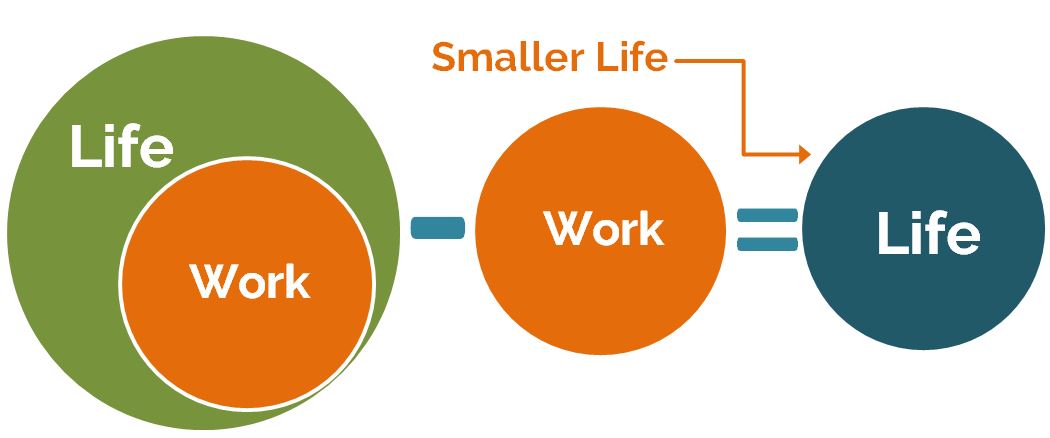

Just as subtracting work from our lives without adding other things in could result in a smaller life, subtracting work joy from our lives without replicating it in some way means a less joyful life. So let’s get replicating!
Replicate the Joyful Tasks
Next comes the most fun part: brainstorming how best to use your awesome powers in your second act. You know that old line, “If you do work you love, you’ll never work a day in your life”? That line smacks of privilege, of course, because it’s simply not possible for everyone to do work they love, but we already know that we’re a privileged bunch for getting to pursue early retirement to begin with. So the goal is to follow that joy and use the source of it to help us shape our next lives.
Free yourself to think outside the standard work boxes — we’re doing this from a place of not necessarily needing to earn money from it, after all — and consider:
How could I use this skill in ways that are totally different from how I use them now?
What would an ideal project look like that lets me use the skill I’m great at while avoiding all the stuff about work that I don’t like at all?
How could I use my awesomeness in a way that aligns with my purpose?
How does this task that brings me joy line up with my life dreams, and could there be a way to combine them?
What’s the coolest thing I could imagine getting paid to do?
Those are thought-starter questions, and where you take them depends entirely on the nature of the thing(s) that bring you joy, as well as what you imagine your early retirement to be like. But don’t limit yourself. Think outside the box. Think big. Make everything a possibility.
Our Replication Plan
We can’t share all the details yet, but we have a crazy idea in the works for our second act that involves the best of what I’m good at with the best of what Mr. ONL is good at. And we can’t wait to share more about that later this year!
What Brings You Joy at Work?
Any revelations from the exercise? Or have a gut sense of what you’re awesome at in your work? What muscles do you know you need to continue to flex in early retirement? Any kick-ass plans for post-retirement projects that will let you use those skills and bask in the warm fuzzies? Let’s all share in the comments!